Software & AI
AI-Built Clones of Photoshop and Word: What’s Legal, What’s Risky, and What It Means for SaaS
AI-built Adobe and Microsoft Office clones aren’t piracy. What makes software cloning legal or risky, how clean-room reverse engineering works, and who’s exposed.
Published 34 min read
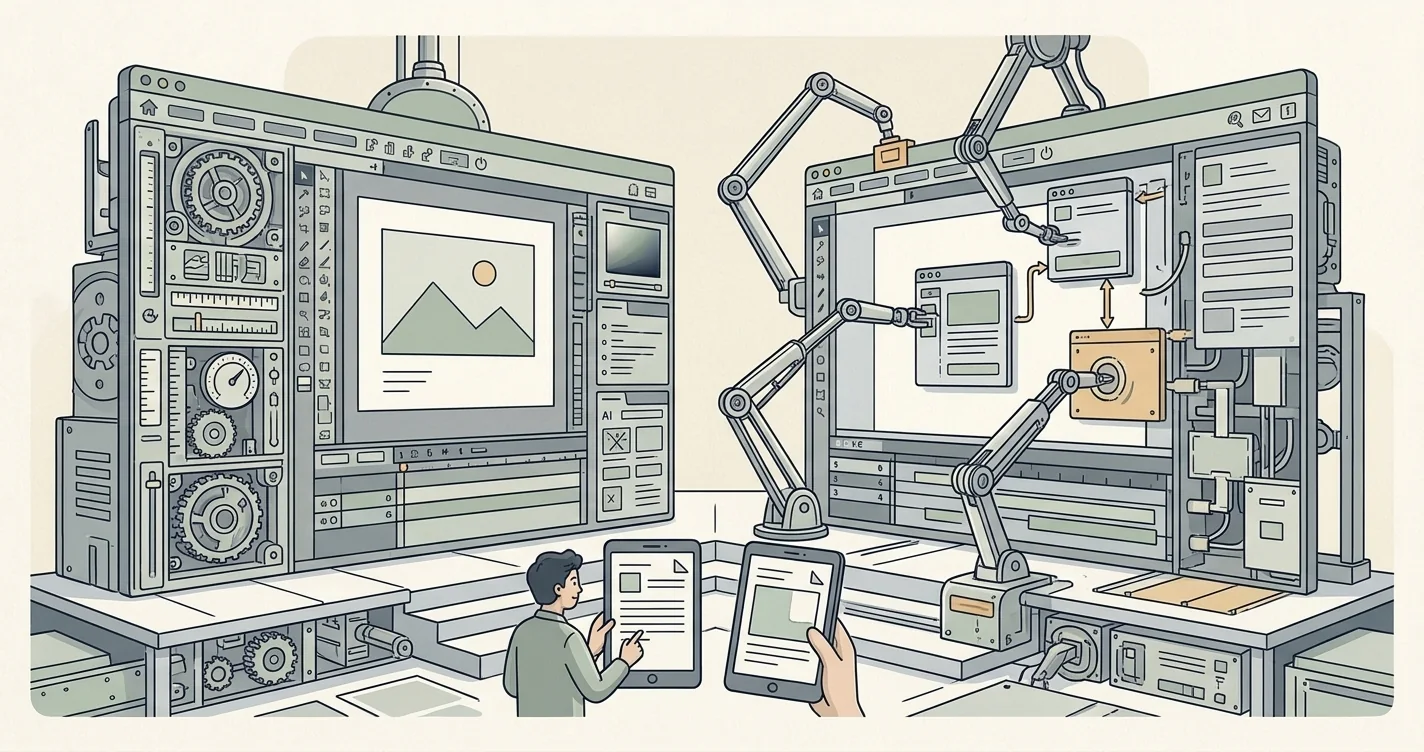
In four weeks, a developer working with an AI coding model, joined by a fast-growing crowd of outside contributors, has produced open-source programs that look and behave a lot like Photoshop, Premiere Pro, Lightroom, Word, Excel and PowerPoint. They are free, they install in minutes, and, by their own documentation, none of them is ready to replace the original for professional work.
That combination is why the project, called ArtCraft, deserves a careful read rather than either a celebration or a panic. It raises three questions that usually get blurred together. Is it legal to rebuild someone else’s software? Can you trust a rebuilt tool with real work? And if AI can reproduce a mature desktop application this quickly, which software businesses should worry? This article answers them one at a time, from the projects’ own repositories, the statutes and court decisions that govern software, and the hands-on tests published so far.
What ArtCraft built, and what it has not built yet
ArtCraft began as an open-source AI image and video studio, run by developer Brandon Thomas. From the last day of September 2026 it began publishing a second family of apps, each one a native desktop program written in the Rust programming language and aimed at a familiar commercial product. The code is written largely by Anthropic’s Claude Opus 5.5, and the projects’ own roadmaps measure their remaining work in “Opus 5.5 agent wall-clock hours”. WordCraft roadmap It is no longer a one-person effort: PhotoCraft alone lists more than 100 contributors and over 3,200 merged pull requests. PhotoCraft contributors
Thomas has been candid that this is early work. On Hacker News he described the apps as “not anywhere close to ready”, according to Gizmodo. Gizmodo, Oct 7, 2026 He has said he was motivated by frustration with subscription cancellation fees, and that “99% parity will take a while” but will be “measured in months and not years”. Thought Catalog
The first four weeks
Dates below are repository creation and release dates from GitHub, which mark when code first appeared publicly, plus the dates of the main independent reports.
| Date (2026) | What happened | Evidence |
|---|---|---|
| Sep 30 | Repositories for PhotoCraft, FilmCraft, LightCraft, VectorCraft and PdfCraft created | GitHub |
| Oct 1 | EffectCraft and DesignCraft created | GitHub |
| Oct 7 | WordCraft, GridCraft, DeckCraft, CADCraft and SoundCraft created. Gizmodo publishes the first hands-on, of PhotoCraft | GitHub; Gizmodo |
| Oct 9 | FigCraft and the shared app launcher created | GitHub |
| Oct 10 | WordCraft v0.4.0 ships signed builds for macOS, Windows, Linux, FreeBSD and the web | WordCraft roadmap |
| Oct 13 | Creative Bloq tests LightCraft, PhotoCraft and FilmCraft; Korben.info tests twelve apps on a Mac | Creative Bloq; Korben.info |
| Oct 17 | PhotoCraft’s roadmap review leaves its readiness estimates unchanged | PhotoCraft roadmap |
| Oct 25 | New releases: PhotoCraft v0.16.0, WordCraft v0.11.0, GridCraft v0.12.1 | GitHub releases |
| Oct 27 | The directory still lists 13 apps, three “Early alpha” and ten “In development”, installed through launcher v0.5.1 | getartcraft.com |
The 13 apps and what each one targets
The official app directory describes each app by category and does not name a commercial product. The target in the middle column comes from each project’s own repository description or contributor instructions, and where a project names no vendor, we say so rather than guess. ArtCraft app directory
| App | Target named by the project | Category | Directory status |
|---|---|---|---|
| PhotoCraft | Adobe Photoshop | Image editing | Early alpha |
| VectorCraft | Adobe Illustrator | Vector illustration | In development |
| FilmCraft | Adobe Premiere Pro | Video editing | In development |
| LightCraft | Adobe Lightroom | Photo library and raw developing | In development |
| PdfCraft | Adobe Acrobat | PDF reading and editing | Early alpha |
| EffectCraft | Adobe After Effects | Motion graphics | In development |
| DesignCraft | Adobe InDesign | Page layout | In development |
| WordCraft | Microsoft Word | Word processing | In development |
| GridCraft | Microsoft Excel | Spreadsheets | In development |
| DeckCraft | Microsoft PowerPoint | Presentations | In development |
| CADCraft | AutoCAD (“AutoCAD-style”) | CAD and drafting | In development |
| SoundCraft | Avid Pro Tools | Digital audio workstation | In development |
| FigCraft | None named (“collaborative design workflows”) | Interface design | Early alpha |
The repositories we reviewed are dual-licensed under MIT or Apache 2.0, both permissive open-source licences, and the WordCraft README carries a disclaimer that it is not affiliated with or endorsed by Microsoft or Adobe. WordCraft README
Open-source alternatives to Adobe and Microsoft are not new. LibreOffice, GIMP, Inkscape and Krita have existed for years. What is new is the speed and the target: a deliberately familiar interface, aimed at near-complete parity with one specific commercial product, produced largely by an AI agent in weeks rather than by a volunteer community over decades.
Why feature coverage doesn’t equal software readiness
The most revealing documents in the whole story are the projects’ own roadmaps. Each one measures two very different things, and the gap between them is the clearest lesson for anyone thinking of switching.
| App | Commands or menus covered (measured) | Ready for real work (estimate) | Typical professional (estimate) |
|---|---|---|---|
| PhotoCraft | 628 of 628 menu items; 56 of 68 tools | ~45% | ~43% |
| WordCraft | 493 of 508 ribbon and menu items (97%) | ~60% | ~55% |
| GridCraft | 274 of 290 ribbon items; 513 of 523 worksheet functions | ~50% | ~50% |
Sources: the PhotoCraft roadmap, measured October 10 and last reviewed October 17; the WordCraft roadmap, measured October 10; the GridCraft roadmap, measured October 11. All three were updated as recently as October 25 with readiness estimates unchanged. PhotoCraft roadmap GridCraft roadmap
In other words, almost every menu item exists, but the projects themselves estimate that a typical professional would find roughly half of their weekly work fully supported. The command count measures whether a button exists. The readiness estimate discounts for whether the feature goes deep enough, whether the app is stable, and whether files survive exchange with the original. That second number is the one that predicts whether a deadline will be met.
The roadmaps are unusually honest about why. WordCraft’s says “DOCX has never been tested on real-world files” and that “charts, SmartArt and OLE objects are dropped silently”. It also reports, among 120 issues opened by outside users, four messages of praise and zero reports of anyone switching from Word. PhotoCraft’s says 22 of its 25 performance budgets are missed and that the PSD files it writes “are not yet reliably accepted by Photoshop”. GridCraft’s notes that 100 MB workbooks do not open and that the older .xls format is not supported.
Issue queues are growing as fast as the user base. PhotoCraft’s roadmap counted 953 open issues on October 13; on October 27 GitHub shows 2,183 open against 2,636 closed. WordCraft has 1,045 open and GridCraft 683, each with more open than closed. PhotoCraft issues
Read the numbers carefully
Every percentage above is the developer’s own estimate, produced with a published weighting method, not an independent benchmark. Releases now ship every few days, so check the dated roadmap before relying on any figure.
Independent hands-on tests, app by app
Three outlets have published detailed hands-on tests: Gizmodo (PhotoCraft, October 7), Creative Bloq (three apps on a Windows PC with Canon EOS R5 files, October 13) and Korben.info (twelve apps on a Mac, October 13). Their findings, unlike the roadmap figures above, come from people outside the project.
- PhotoCraft (Photoshop): the strongest result. Korben opened a seven-layer PSD, matched Photoshop’s flattened render pixel for pixel, re-saved it and reopened it intact, and Creative Bloq’s PSD open and save also worked. Filters would not preview in Creative Bloq’s test, and Gizmodo found that escaping the Free Transform tool “simply didn’t work”, calling the app “glitchy, but real, Photoshop”.
- LightCraft (Lightroom): imported a folder of JPEGs, but Creative Bloq found no camera-matched colour or lens profiles for its raw files and harsh sharpening artefacts.
- FilmCraft (Premiere Pro): imported short MP4 clips, but could not play Creative Bloq’s 10-bit 4:2:2 footage without conversion and, in both tests, could not open Premiere’s .prproj project files.
- WordCraft, GridCraft and DeckCraft (Office): Korben’s simple Word document, with headings, a list and a table, displayed correctly, GridCraft recalculated SUM, AVERAGE and MAX formulas without error, and DeckCraft showed three PowerPoint slides. The interface and spellchecker defaulted to English on a French system.
- EffectCraft, SoundCraft and CADCraft: each handled a basic open file, but EffectCraft cannot open After Effects .aep projects, SoundCraft exchanges no AAF or OMF sessions, and CADCraft drops entities it does not support when it saves a drawing.
The pattern is consistent. Formats with published specifications, such as PSD, DOCX, SVG and DXF, open well; proprietary project formats do not open at all. Creative Bloq’s verdict, that the suite is “not currently stable or complete enough” to replace existing software, still stands.
As of October 27, 2026, neither Adobe nor Microsoft has commented publicly on the projects, and there is no lawsuit and no takedown notice in GitHub’s public DMCA repository.
Piracy, cloning and reverse engineering are not the same thing
Much of the coverage calls these apps knockoffs or piracy. The distinction matters, because the law treats each activity differently, and so should anyone deciding whether to use one.
| Activity | What it means in practice | Legal starting point | Example |
|---|---|---|---|
| Piracy | Copying, distributing or using the vendor’s actual program without permission | Copyright infringement almost everywhere, because the vendor’s own code is reproduced | A cracked copy of Photoshop |
| Licence circumvention | Defeating activation, DRM or access controls | Unlawful in its own right under anti-circumvention law in the US, EU and UK, even if nothing is copied; exceptions are narrow | A key generator or patched activation check |
| Functional cloning | Writing new code that does similar things | Lawful by default, because copyright does not protect functions; risk comes only from copied code or assets, confusing branding or patents | A new editor with layers, masks and familiar shortcuts |
| Black-box reverse engineering | Observing inputs and outputs to learn how a program behaves | Lawful under copyright in the US, EU and UK; in the US a licence can still forbid it as a matter of contract | Saving test files and comparing the results |
| Decompilation | Translating the binary back into readable code | Allowed only where strictly needed, chiefly for interoperability in the EU and UK and as fair use in some US cases; the code learned may not be reused | Recovering an undocumented file format from the code |
| Clean-room reimplementation | Cloning with documented separation between study and coding | Strong evidence against a copyright copying claim when the separation is real and recorded; no defence to patents, trademarks or a broken licence | Spec team writes requirements; a separate team writes code |
| AI-assisted cloning | A coding agent writes the new implementation | Lawful on the same terms as human-written clones; output that reproduces protected code or assets infringes, whoever or whatever typed it | An agent builds a word processor from public file specifications |
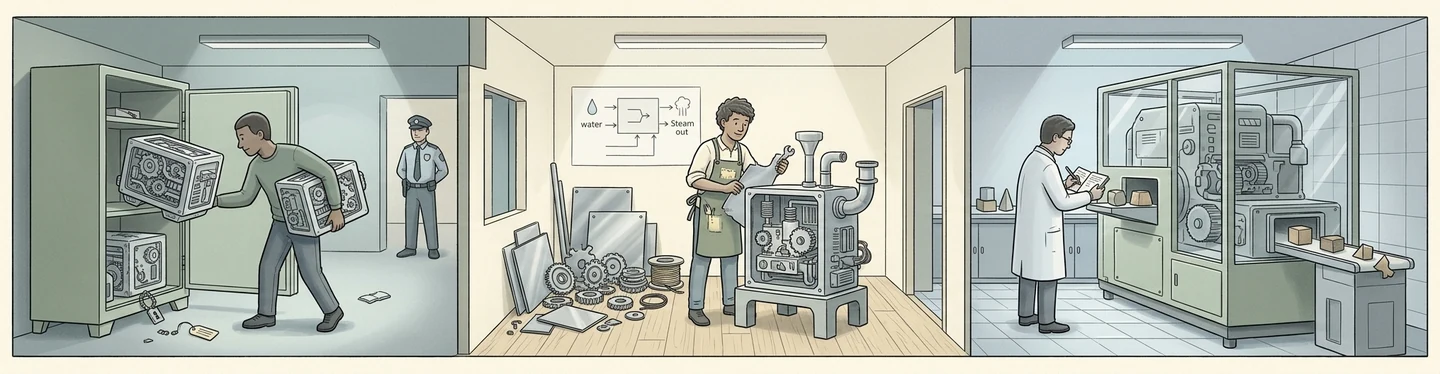
Two of these are often confused in the ArtCraft story. Vice described the apps as reverse-engineered, while their developer calls them clean-room reimplementations. Vice, Oct 9, 2026 Both can be true. Clean-room work usually involves black-box reverse engineering: you observe the original’s behaviour. What the clean room adds is a discipline about who sees what, so that the new code cannot have been copied from the old.
Is cloning software legal? The law protects code, not capability
The short answer: you may build software that does what Photoshop does. You may not copy Photoshop’s code, and you may not copy its protected creative assets, such as icons, templates or artwork, to get there. That principle holds in the US, the EU and the UK. What differs between them is how far you may go to study the original, and whether a licence agreement can stop you.
Copyright protects expression: the specific code someone wrote, and creative elements such as graphics and text. It does not protect ideas, procedures or methods of operation. A layer panel, a blur filter, a spreadsheet formula or a track-changes feature is a function. Two programmers who build the same function independently will each own their own code.
United States
The Copyright Act says protection never extends to “any idea, procedure, process, system, method of operation, concept, principle, or discovery”. 17 U.S.C. § 102(b) Four court decisions show how far that goes for software, and each has limits that are often ignored.
- Lotus v. Borland (1st Cir. 1995). Borland copied the menu command hierarchy of Lotus 1-2-3 so users could keep their keystroke habits. The court held that the menu hierarchy was an unprotectable method of operation. The Supreme Court split 4 to 4 in 1996, which left the ruling in place but created no national precedent. It is the case most directly relevant to a clone that mirrors a ribbon or menu structure. Lotus v. Borland opinion
- Sega v. Accolade (9th Cir. 1992). Disassembling Sega’s code to learn its interface requirements was a fair use, because it was the only way to reach the unprotected functional elements and there was a legitimate reason. The holding protects the intermediate copying; it did not license copying the code into a product. 977 F.2d 1510
- Sony v. Connectix (9th Cir. 2000). Copies of the PlayStation BIOS made while building a compatible emulator were fair use. The court again stressed that the final product contained none of Sony’s code. Copyright Office summary
- Google v. Oracle (U.S. Supreme Court, 2021). Google’s reuse of about 11,500 lines of Java API declarations was fair use. The Court assumed, without deciding, that the code was copyrightable. It did not hold that copying APIs is always lawful, and it did not decide that interfaces are unprotected. 593 U.S. 1 (2021)
The US also has a separate anti-circumvention law. Breaking an access control, such as an activation check, is unlawful even when no copying follows. The interoperability exception in 17 U.S.C. § 1201(f) is narrow: it covers circumvention “for the sole purpose” of identifying elements needed to make an independently created program interoperate, by someone who lawfully has the right to use the program. 17 U.S.C. § 1201(f) A clone built purely from public specifications and observed behaviour never needs it.
The biggest US gap is contractual restrictions. Courts have enforced licence terms that forbid reverse engineering, most notably in Bowers v. Baystate (Fed. Cir. 2003), where a shrink-wrap ban on reverse engineering was upheld even though the activity might otherwise have been fair use. 320 F.3d 1317 That makes the licence you accepted as important as copyright law itself, as the next section shows.
European Union
The Software Directive states the principle directly: “Ideas and principles which underlie any element of a computer program, including those which underlie its interfaces, are not protected by copyright.” It then gives users two specific rights. Directive 2009/24/EC
- Observe, study and test (Article 5(3)). Anyone with a right to use a copy may observe, study or test how it functions to determine its underlying ideas and principles, while doing things they are already entitled to do, such as running it.
- Decompile for interoperability (Article 6). Decompiling is allowed only when it is indispensable to achieve interoperability of an independently created program, the information is not already available, and the work is confined to the necessary parts. The results may not be used to build a program “substantially similar in its expression”.
The crucial EU difference is Article 8: contract terms contrary to those rights are “null and void”. A licence cannot take away a lawful user’s right to observe and test the program.
The leading case is SAS Institute v. World Programming (Court of Justice, 2012). World Programming lawfully licensed SAS software, studied how it behaved, and wrote its own program that could run SAS-language scripts. The court held that a program’s functionality, its programming language and its data file formats are not protected expression under the directive, and that a licensee could not be stopped by contract from observing and testing the program. It also held that copying elements of SAS’s user manual could still infringe, a reminder that documentation and other text are protected even when functionality is not. Case C-406/10
United Kingdom
UK law kept the EU rules after Brexit and states them in its own statute. Section 50BA of the Copyright, Designs and Patents Act 1988 lets a lawful user observe, study or test a program’s functioning, and says any agreement term that tries to prohibit or restrict that is void (by section 296A). Section 50B allows decompilation for interoperability on conditions similar to the EU’s. CDPA s.50BA CDPA s.50B
UK courts have also been sceptical of claims over a program’s behaviour. In Navitaire v. easyJet (2004), the High Court refused to treat the business logic and commands of an airline booking system as protected when a competitor rebuilt similar functionality with new code, although some screen designs were treated differently. Independent implementation of the same behaviour was not infringement. [2004] EWHC 1725 (Ch) Since Brexit, UK law is free to diverge from the EU’s, so the two should be checked separately.
US, EU and UK side by side
| Question | United States | European Union | United Kingdom |
|---|---|---|---|
| Is a program’s functionality protected by copyright? | No (§ 102(b)) | No (Art. 1(2); SAS v. WPL) | No (follows SAS; Navitaire) |
| May a user observe and test a program to learn how it works? | Generally yes, unless a licence forbids it | Yes (Art. 5(3)); contrary terms void | Yes (s.50BA); contrary terms void |
| May a user decompile it? | Sometimes, as fair use (Sega, Connectix) | Only for interoperability (Art. 6) | Only for interoperability (s.50B) |
| Can a licence ban reverse engineering? | Often enforceable (Bowers v. Baystate) | Not for the Art. 5(3) and Art. 6 rights | Not for s.50BA and s.50B acts |
| Breaking access controls | Prohibited; narrow § 1201(f) exception | Prohibited under national law implementing EU rules | Prohibited; narrow exceptions |
Other countries have their own rules, and none of the above should be read as universal. The pattern of protecting code but not function is widely shared, but the details on decompilation, contract override and circumvention vary, and they decide real cases.
Six legal questions a clean room does not answer
Writing new code addresses one question: did you copy the original’s code? Six others remain, and a project can pass the first test and still fail one of these.
1. Contract: the licence you clicked
This is the most underrated risk in the ArtCraft story. Adobe’s General Terms of Use, effective October 3, 2025, include a section on modifications, reverse engineering and AI training. It says Adobe does not allow users to “recreate or attempt to recreate our products”, and its reverse-engineering ban expressly includes “monitoring or tracking the inputs and outputs” of its software to recreate it. Adobe General Terms, s.17
That language targets exactly what black-box cloning involves. PhotoCraft’s roadmap says its parity figures were “measured from the installed app”, Photoshop 2026, on October 10, and its contributor rules say the team studied Photoshop “for behaviour and look only”. PhotoCraft AGENTS.md Whether any breach occurred depends on facts not public, including whose licence was used and where. What the comparison shows is how much the answer depends on jurisdiction. Adobe’s terms are governed by California law for North American customers, where Bowers v. Baystate suggests a reverse-engineering ban can be enforced, and by Irish law elsewhere, where the EU directive makes terms that override a lawful user’s right to observe and test void.
A breach of contract is not copyright infringement. It is a claim against the person who accepted the terms, and it does not by itself make the resulting code infringing.
2. Trademarks, trade dress and designs
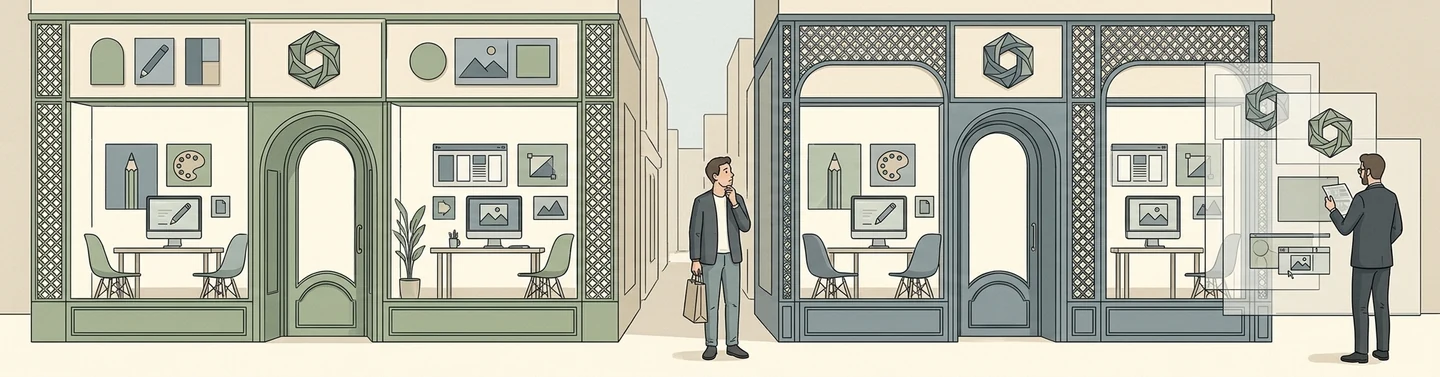
Copyright does not stop a clone from working like Photoshop, but trademark law can stop it from being presented in a way that confuses buyers about who made it. Names, logos and distinctive product presentation are protected, and some jurisdictions protect a product’s overall look, called trade dress in the US, when it identifies the source. ArtCraft uses its own names and states it is not affiliated with Adobe or Microsoft, which is the standard way to describe compatibility without implying endorsement. Its documentation also describes matching Photoshop’s look closely, and that is where the legal exposure sits.
Interface graphics are a separate issue. Icons, illustrations and other artwork are protected as creative works, and graphical interfaces can be registered as designs in the EU and UK or protected by design patents in the US. In the EU, the Court of Justice held in BSA v. Ministry of Culture (2010) that a graphical user interface is not protected as part of the program’s code but can be protected by ordinary copyright if it is its author’s own intellectual creation. Case C-393/09 PhotoCraft’s contributor rules say the team studied Photoshop “for behaviour and look”, which is why its interface, not its code, is the more exposed part of the project. WordCraft’s rules forbid copying, tracing or recreating any icon, image, template, font or sound from Microsoft, Adobe, Avid or Autodesk products, and require every asset to have an attribution record. WordCraft AGENTS.md
3. Patents
Clean-room development is no defence to a patent. Patent infringement does not require copying, so a team that independently invents a patented technique, such as a specific image-processing or compression method, can still infringe. Many patents in mature file formats and media codecs have expired, but not all, and that is one reason established vendors license codecs rather than simply implementing them.
4. Trade secrets
Reverse engineering a lawfully acquired product is not trade-secret misappropriation. US federal law says improper means “does not include reverse engineering, independent derivation, or any other lawful means of acquisition”, and the EU Trade Secrets Directive treats observing and testing a lawfully obtained product as lawful unless a legally valid duty restricts it. 18 U.S.C. § 1839(6) Directive (EU) 2016/943 Trade-secret risk arises when someone uses leaked source code, internal documents, or a former employee’s knowledge. A clean room is designed to exclude exactly that.
5. Open-source licences
Clones can infringe open-source projects as well as commercial ones. Copying code from a copyleft project such as LibreOffice (licensed under the MPL) or from GPL-licensed tools into a permissively licensed clone would break those licences’ terms. WordCraft’s rules explicitly forbid copying GPL, LGPL or AGPL code from LibreOffice, AbiWord or pandoc. Using an AI model does not dissolve these obligations, which is the argument at the centre of the chardet dispute described below.
6. Who owns AI-written code
A less discussed question cuts the other way: how much of an AI-written clone can its own developers own? In the US, copyright requires a human author. The Copyright Office’s January 2025 report concluded that purely AI-generated material is not protectable, while human selection, arrangement and modification can be, and the D.C. Circuit upheld the human-authorship requirement in Thaler v. Perlmutter in 2025. The Supreme Court declined to review that case in March 2026. Copyright Office, Jan 2025 Thaler v. Perlmutter
For users of open-source clones this rarely matters day to day: the licence still grants you permission, and code nobody owns is free to use anyway. It matters more for businesses that plan to build commercial products on top of a largely AI-written codebase and expect to enforce rights in it.
Clean-room reverse engineering: how independent reimplementation works
“Clean room” is an engineering term, not a legal status. The name borrows the idea of a contamination-free room: in software it describes a way of building a compatible replacement so that you can later prove the new code was not copied. The best-known early example is the IBM PC BIOS: in the early 1980s, companies including Compaq and Phoenix Technologies built compatible firmware by separating the engineers who studied IBM’s product from the engineers who wrote the replacement. Background: clean-room design
The method works because copyright infringement requires copying. If the people who wrote the code demonstrably never had access to the original’s code, similarity in what the programs do cannot be explained by copying. Courts have long accepted independent creation as a complete answer to a copying claim. The clean room is simply a way of generating the evidence.
Clean-room example: rebuilding a word processor’s tracked changes without copying code
Take one feature, the way a word processor records tracked changes, through the five stages.
- Original software. The specification team uses a licensed copy of the original, in a jurisdiction and under terms that permit study, and reads the public file-format standard, for Word documents the ECMA-376 (Office Open XML) specification.
- Observed behaviour. They create synthetic test documents, turn tracking on, insert and delete text, and record what happens on screen and in the saved file: “An insertion by a second author appears in a different colour; the saved file marks it with the author’s name and a timestamp.”
- Independent functional specification. They write requirements describing behaviour, not code: “Each insertion records author and time. Accepting a change removes the marker and keeps the text. Rejecting an insertion removes the text.” A reviewer checks that the specification contains no copied code, wording or screenshots.
- Independent implementation. A separate implementation team that has never examined the original’s code or internals writes new code from the specification alone.
- Compatibility testing. Files saved by the new program are opened in the original, and vice versa, to check that tracked changes survive the round trip. Failures go back to the specification team as new behavioural observations, never as code.
Nothing in this process requires decompiling anything. It relies on public standards and observable behaviour, which is also what ArtCraft says it uses.
What proves a clean room, and what does not
A clean room is only as strong as its records. Saying “we built it clean room” proves almost nothing; being able to show the following proves a great deal.
- Separation: who was on each team, and evidence that implementers had no access to the original’s code, internals or leaked materials.
- Specification provenance: every requirement traceable to a public standard or a recorded observation.
- Review gates: a person checking that nothing protected crossed from the study side to the coding side.
- Asset records: the source and licence of every icon, font, template and sample file.
- A preserved audit trail: version history, review notes and test logs kept long enough to be produced if challenged.
ArtCraft has published more of its process than most projects. WordCraft’s contributor rules allow Word to be observed only as a black box on the development machine, with screenshots of its window kept out of the repository; forbid reading, disassembling or copying anything inside the Word application bundle; require file formats to come from public specifications such as ECMA-376; and forbid copying Microsoft wording beyond feature names. PhotoCraft’s rules say to implement from public specifications, including Adobe’s published PSD specification, and observation. WordCraft AGENTS.md
Those are real controls. But they describe a single-actor process: the same development setup observes the original and writes the code, the observation records are not public, and no independent party has reviewed them. Since then, more than a hundred outside contributors have merged code into PhotoCraft alone, and the project has published nothing showing what each of them had seen. That is a long way from the two-team separation that gives a traditional clean room its evidential strength. The clean-room claim describes the project’s intended process; it is not yet a verifiable record.
Can an AI agent work in a clean room?
In principle, yes. An agent can be given only a functional specification and public standards, with no access to the original’s code, and its inputs can be logged. In some ways an agent is easier to isolate than a human, because its context can be recorded completely. The weak points are different from a human team’s:
- Context leakage. If the same agent session that inspected the original also writes code, there is no separation at all.
- Training data. Critics argue that a model trained on large amounts of public code was never “clean”. That concern is real at the level of policy, but it is not evidence that any particular program copied any particular code. Infringement is shown by comparing the outputs with protected works, not by pointing at what a model might have seen.
- Records. An instruction such as “do not copy” is not evidence. Logs of what the agent was actually given are.
The precedent everyone is watching
In March 2026, the maintainers of chardet, a widely used Python library long licensed under the LGPL, released version 7.0.0 as a “ground-up, MIT-licensed rewrite”. The library’s original author, Mark Pilgrim, objected that the maintainers “had ample exposure to the originally licensed code (i.e. this is not a ‘clean room’ implementation)”, adding that “adding a fancy code generator into the mix does not somehow grant them any additional rights.” The GitHub issue has since been closed; no court has ruled on the question. chardet issue #327
The dispute shows the two positions clearly. One says what matters is whether the new code is actually independent, however it was produced. The other says that exposure to the original, plus an AI tool, cannot produce a clean room. Expect the same argument wherever AI is used to rebuild software.
Can AI-written code be traced back to what the agent saw?
If a dispute ever asks whether a developer fed an agent proprietary code, the evidence will not come from a hidden signature in the code. It will come from records.
- Watermarks are not a code fingerprint. Anthropic now marks Claude’s output, with text watermarks and C2PA Content Credentials on generated files, but says a detected mark “is not fully conclusive”, that its absence proves nothing, and that detection is limited to eligible organisations such as regulators. Anthropic Code that is reformatted, refactored and compiled is exactly the kind of heavily edited output those caveats describe, and academic code-watermarking schemes remain research prototypes.
- Even a perfect detector answers the wrong question. Knowing that an AI wrote a function says nothing about whether it copied anything. Infringement is shown by comparing the new code with the protected work, plus evidence of access, exactly as with human authors.
- Agent records are the real provenance. Coding agents keep prompts, file reads and tool calls in session logs, and version control records who committed what and when. Those records can be preserved and produced in litigation like any other document. They show what the agent was actually given, which is the question a clean-room claim turns on.
The practical conclusion runs in both directions. A project that keeps its agent logs can show what its agents were and were not given. A project that discards them, or lets contributors use agents without records, has given up its best evidence of independence.
Silent file-compatibility failures: “it opens the file” is not “it works”
The most expensive failure in replacement software is rarely a crash. A crash is visible. The expensive failure is the file that opens, looks right, saves without complaint, and has quietly lost something your client will notice later.
That happens because modern file formats are containers for many features, and a new program may read the parts it understands and drop the rest. WordCraft’s own roadmap describes exactly this behaviour for charts, SmartArt and embedded objects. PhotoCraft’s README makes the subtler version of the point: re-saving renders the same for 307 of 309 files in a public test set, yet its roadmap says the PSD files it writes are not reliably accepted by Photoshop. A file can look right in the clone and still fail in the original. PhotoCraft README
| File type | What can go wrong quietly | What the evidence says (October 2026) |
|---|---|---|
| Word (.docx) | Charts, SmartArt, embedded objects, content controls, pagination, comments and tracked changes | WordCraft roadmap: charts, SmartArt and OLE objects “dropped silently”; content controls lost; never tested on real-world files |
| Excel (.xlsx, .xls) | Formulas that calculate differently, pivot caches, macros, very large workbooks, legacy files | GridCraft roadmap: 100 MB workbooks do not open; no .xls support; 504 of 523 functions working |
| Photoshop (.psd, .psb) | Smart objects, layer effects, colour profiles, files the original later rejects | PhotoCraft roadmap: written PSDs not reliably accepted by Photoshop. Creative Bloq and Korben: PSD open, save and reopen worked in their tests |
| Premiere and After Effects projects (.prproj, .aep) | The whole edit: timeline, effects, media links | Creative Bloq and Korben: FilmCraft cannot open .prproj; EffectCraft cannot open .aep |
| Camera raw (for example .CR3) | Colour starting point, lens corrections, metadata | Creative Bloq: no camera-matched colour or lens profiles in LightCraft |
| PowerPoint (.pptx) | Animations, transitions, SmartArt, embedded video, speaker notes | Korben: three simple slides displayed. No test of complex decks yet |
| CAD (.dwg, .dxf) | Precision, blocks, external references, layers, units | Korben: a DXF drawing kept its proportions, but CADCraft drops unsupported entities on save |
| Audio sessions (Pro Tools, AAF, OMF) | Track layout, edits, automation, plug-in settings | Korben: SoundCraft exchanges no AAF or OMF sessions yet |
The defence is a round-trip test, explained in the CLONE test below: open a representative file, make a change, save, reopen it in the original application, and compare. Spreadsheets need an extra step, because a sheet can look identical while a formula produces a different number. Compare calculated values, not just appearance.
The Calipzo CLONE test: five checks before you trust a clone
The CLONE test is an editorial framework for evaluating any unfamiliar replacement software, AI-built or not. It is not a security certification or a legal opinion. Each check names what to look for, the evidence that counts, the warning signs, a practical test, and what skipping it can cost you.
CCode provenance
Is this the authentic project and the authentic build?
- Investigate
- Where the download comes from, who publishes it, and whether the release matches the source.
- Evidence that counts
- A link from the official site to the repository; release notes; published checksums; code signing; a lockfile pinning dependencies.
- Warning signs
- Download links shared on social media or forums, look-alike repository names, installers not listed on the official release page, or checksums that do not match.
- How to test it
- Start from the official site, follow its link to the repository, download from the release page, and compare the file’s SHA-256 hash with the published list. On Windows:
certutil -hashfile file SHA256. On macOS or Linux:shasum -a 256 file. - If you skip it
- Popular free software attracts impostor installers. A fake build runs with your full user permissions.
LLegal clarity
Are the licence and the claims about how it was built supported?
- Investigate
- The licence of the code, the licences of bundled assets, and what the project says about how it was developed.
- Evidence that counts
- A standard licence file; an attribution list for fonts, icons and samples; written contributor rules on clean-room practice; a non-affiliation notice.
- Warning signs
- No licence; vendor logos, icons or templates that look lifted; bundled proprietary fonts; vague claims such as “100% legal” with no process behind them.
- How to test it
- Open the licence and attribution files. Compare a handful of icons and templates with the original’s. Check that output files carry no third-party branding.
- If you skip it
- You inherit any problem in the assets you ship to clients, and a project facing a legal challenge can disappear or be forced to change abruptly.
OOutput fidelity
Can it complete my work without hidden damage?
- Investigate
- Whether your real file types survive import, editing, export and reopening in the original application.
- Evidence that counts
- Your own round-trip results on representative files; the project’s documented gaps; independent hands-on reviews with versions and dates.
- Warning signs
- Features listed as supported with no mention of round trips; warnings you cannot read on import; anything described as “dropped” or “ignored”.
- How to test it
- Use copies of five real but non-confidential files that exercise your hardest features. Edit each, save, reopen in the original, and compare side by side. For spreadsheets, compare calculated totals; for documents, page count and objects; for images, layers and colour.
- If you skip it
- Silent loss surfaces at the worst moment: when a client opens the file in the original software.
NNetwork and data safety
What can it read, change, upload or expose?
- Investigate
- Network connections, telemetry, automation interfaces such as MCP servers and local control channels, and which folders they can reach.
- Evidence that counts
- Documented settings that confine automation to chosen folders; loopback-only and authenticated control channels; a security policy with a private reporting route.
- Warning signs
- Automation enabled by default; agent access to your whole home folder; no way to report a vulnerability privately.
- How to test it
- Run it first on a machine or user account without client data. Watch outbound connections with your operating system’s firewall. If you connect an AI agent, confine it to a scratch folder.
- If you skip it
- A malformed file or a manipulated agent instruction could read, alter or delete work it should never have reached.
EExit and continuity
Can I recover and move on if this fails?
- Investigate
- Export to open formats, the health of the project, and your fallback if it stalls.
- Evidence that counts
- Export to standard formats; a steady release history; issues being answered; more than one maintainer; your own tested backups.
- Warning signs
- A proprietary native format with no clean export; a single maintainer; issue counts rising far faster than they close.
- How to test it
- Export a finished project to a standard format and open it elsewhere. Restore one file from backup. Keep the original application installed until the clone has passed three real jobs.
- If you skip it
- Saving a subscription fee is only a saving if you can still deliver when the tool fails.
A one-hour trial you can run this week
An hour is enough to expose obvious compatibility gaps and risky permissions. It is not a substitute for a full security audit or for weeks of real use. Do it on copies of non-confidential or synthetic files, on a machine or account that holds no client data.
- Provenance, 10 minutes. Reach the download through the official site, verify the checksum, and read the licence and attribution files.
- Import, 15 minutes. Open five representative files. Note every warning and anything missing.
- Round trip, 15 minutes. Edit, save, and reopen each file in the original application. Compare pages, objects, layers, formulas and colour.
- Permissions and network, 10 minutes. Check which automation features are on, what folders they reach, and what the app connects to.
- Project health and exit, 10 minutes. Read the known-gaps list and recent issues, check how often releases ship, and export one file to an open format.
Where not to use alpha software yet
Keep live financial records, regulated data, confidential client files, engineering drawings and anything with a hard deadline in your established tools. Run the alternative alongside, on copies, until it has passed your own round-trip tests on real jobs.
Security, supply chain and agent permissions
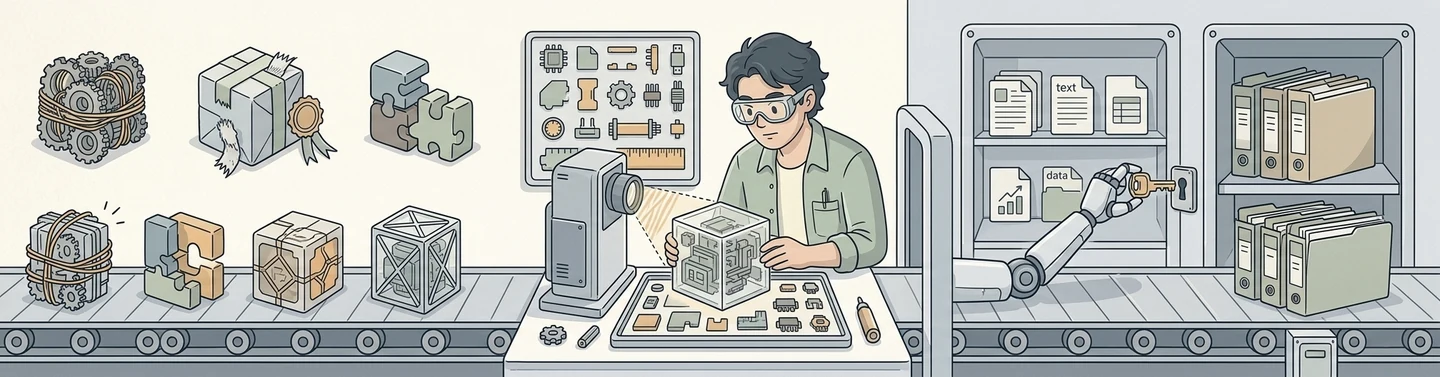
Open source is not the problem. Mature open-source software is some of the most heavily reviewed code in the world. The questions with brand-new software are maturity and verification, and they apply to closed-source newcomers just as much.
- File parsers are attack surface. Programs that read complex formats such as PSD, DOCX or PDF have historically been a common source of security bugs. PhotoCraft’s own security policy tells contributors to treat files, paths, metadata and automation requests as “potentially malicious”, which is the right instinct. On October 27 it still says the project “does not currently document a dedicated private security email or private reporting channel”, and that audit controls for its automation interface “are not yet implemented”. PhotoCraft SECURITY.md
- Signing proves origin, not safety. The projects publish SHA-256 checksums and code-signed installers, macOS builds are notarised, and the ArtCraft launcher checks each app’s SHA-256 fingerprint before installing it. That confirms who built the file and that it was not altered. It says nothing about whether the code is free of bugs, and the projects document no independent security audit.
- Dependencies. Rust projects pin their dependencies in a lockfile, which makes the supply chain inspectable. AI-written code adds one specific hazard: models sometimes suggest packages that do not exist, which attackers then register, a pattern known as slopsquatting.
- Agent control. The apps are built to be driven by AI agents. WordCraft runs an MCP server and offers flags that confine an agent to chosen read and write folders, and PhotoCraft’s live control channel is documented as authenticated and loopback-only. Use those limits. An agent that can read untrusted files, access private data and send data out combines the lethal trifecta of agent risk.
No vulnerability in an ArtCraft app has been publicly reported. This is the standard checklist for any young software that handles valuable files, and these apps are very young.
Which software is most exposed to AI cloning
ArtCraft has targeted desktop applications, and that choice is telling. A desktop app is mostly code running on one machine. Reproduce the code and you have reproduced most of the product. A cloud platform is code plus hosted data, live collaboration, integrations, security operations and support. Reproduce its interface and you have reproduced very little of what customers pay for.
The table below is an editorial assessment of relative exposure by category, based on the criteria in the next section. It is not a prediction about any company’s revenue or market share, and naming a company does not mean anyone is cloning it.
| Category | Representative products | Easy to approximate | Hard to replace | Relative exposure |
|---|---|---|---|---|
| A. Single-user desktop tools | Adobe Photoshop, Premiere Pro; Avid Pro Tools; Autodesk AutoCAD | Tools, menus, basic editing | File-format fidelity, colour and precision, plug-in ecosystems, hardware support | Higher for casual and price-sensitive users; lower in professional pipelines |
| B. File-centric productivity | Microsoft Word, Excel, PowerPoint | Documents, formulas, slides | Exact Office compatibility at scale, macros, enterprise administration, bundled cloud services | Higher for individuals; low for managed organisations |
| C. Collaborative cloud design and docs | Figma, Canva, Notion, Coda | Canvas, blocks, templates | Real-time multiplayer sync, shared libraries, hosted data, licensed content, network effects | Moderate |
| D. Workflow and automation | Atlassian Jira, Asana | Boards, tickets, reports | Integrations, permission models, audit history, embedded team process | Moderate to lower |
| E. Systems of record | Salesforce, HubSpot | Records, pipelines, forms | The customer data itself, integration ecosystems, email deliverability, admin tooling | Lower |
| F. Regulated or high-assurance | Intuit QuickBooks, Xero | Invoice and report screens | Tax and regulatory updates, bank connections, certifications, accountability for errors | Lowest |
What actually protects a software business
The more of a product’s value sits in the left column below, the easier it is to approximate with an AI agent. The more sits in the right column, the more a clone of the interface misses.
| Raises exposure | Lowers exposure |
|---|---|
| Value concentrated in features a user can see | Value in hosted data, history and shared workspaces |
| Open or well-documented file formats | Proprietary formats or data that never leaves the service |
| Single-user, offline workflows | Network effects: the product is better because colleagues use it |
| Few integrations | Deep integration with identity, payments, banks or other platforms |
| Low switching cost | Compliance, certification and legal accountability |
| Price far above the cost of maintenance | Support, uptime guarantees and a reliable roadmap buyers depend on |
The distinction to hold onto is between “an AI agent can recreate similar features” and “an AI agent can replace the service”. ArtCraft is evidence for the first. The second requires servers, security teams, compliance work, support staff and years of accumulated customer data, and no coding agent provides those.
The next 12 to 24 months: six things to watch
These are conditional scenarios, each paired with a signal that would show it happening. None is a forecast of a specific company’s results.
- More specialised alternatives. If agents keep cutting the cost of building, expect many narrow tools that do one expensive job well rather than whole-suite clones. Signal: projects reaching beta with published real-file test corpora, not just feature counts.
- Pressure on feature-only pricing. Products whose subscription mainly buys access to standard features will find that harder to justify. Signal: vendors unbundling, adding cheaper single-app tiers, or loosening cancellation terms.
- Ecosystems matter more. Incumbents will compete on cloud storage, collaboration, asset libraries, identity and integrations, which a desktop clone does not include. Signal: more features that only work signed in.
- Maintenance becomes the bottleneck. Writing code is getting cheaper; verifying it is not. ArtCraft’s own roadmaps estimate hundreds to thousands of further agent-hours per app to reach parity, mostly in fidelity, stability and testing. Signal: whether open issues fall as fast as features land.
- Independent-creation claims get tested. The chardet dispute, licence terms aimed at input-and-output monitoring, and trade dress arguments over look-alike interfaces all point to more disputes. Signal: the first court decision on an AI-assisted clean-room claim.
- Openings for small developers and businesses. The same tools let small teams build internal tools, converters and niche products that were never worth building before. Signal: more businesses replacing a single expensive feature, not a whole platform.
The strongest case against the panic
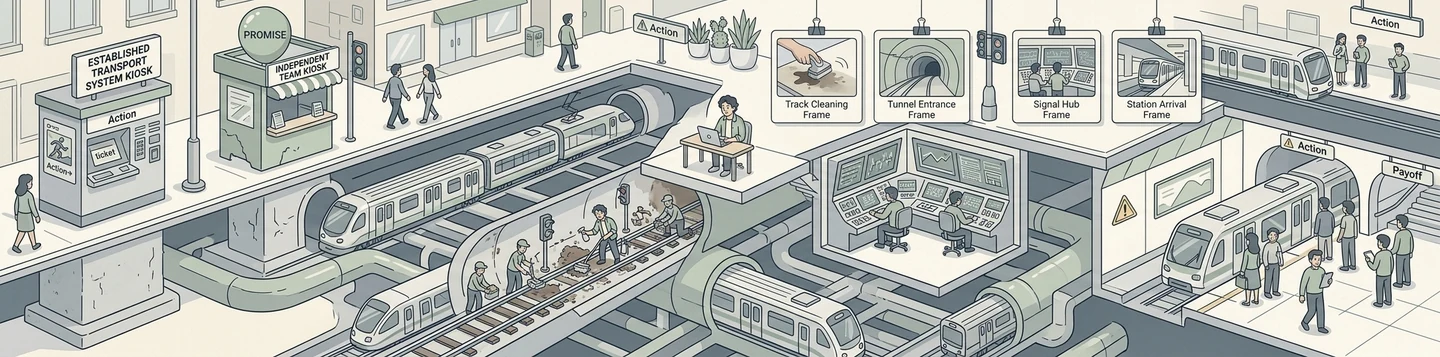
A fair reading has to weigh the arguments that this changes less than it appears.
- Free alternatives already existed. LibreOffice, GIMP, Krita, Inkscape and DaVinci Resolve have been available for years, and Creative Bloq notes that Canva’s Affinity is now free. None ended Adobe’s or Microsoft’s dominance, because compatibility, habit, training and the professional ecosystem count for more than the price.
- The target keeps moving. A clone measured against Photoshop 2026 starts falling behind when Photoshop 2027 ships, and incumbents also use AI to build faster.
- The last 10% is most of the work. ArtCraft’s own estimates put the remaining effort well above the work already done, concentrated in exactly the unglamorous areas, such as file fidelity, pagination and stability, that decide whether professionals trust a tool.
- Subscriptions buy more than software. Cloud storage, fonts, stock assets, collaboration and support are part of what customers pay for, and none of it comes with a desktop clone.
The counterarguments are strong for professionals. They are weaker for students, hobbyists and small businesses who use a fraction of the features and resent paying for all of them. That is the market where good free clones would bite first.
Our verdict
On the law, the answer is clearer than the coverage suggests. Rebuilding what software does is lawful competition in the US, the EU and the UK, and calling it piracy is wrong. The real exposure sits in licence terms, branding, patents and the provenance of every asset, and a clean-room label is only as good as the records behind it. ArtCraft has published unusually specific rules about how it works; it has not published the evidence that would make its clean-room claim verifiable.
On trust, the projects have answered the question themselves. They are honest, fast-moving alpha software that documents silent data loss in common file types. Try them, learn from them, and use the CLONE test before any of them touches a client deliverable.
On the market, the lesson is not that software is dead. It is that features have become cheap to reproduce, so software businesses will increasingly be paid for what a copy cannot carry with it: data that stays intact, services that stay up, integrations that keep working, and someone accountable when something goes wrong. The contest is moving from who ships the most familiar features to who delivers dependable outcomes, and that is a contest the best incumbents and the best open-source projects can both win.
Common questions
Are AI-built clones of Adobe or Microsoft software legal?
Building software that does the same things as Photoshop or Word is not, by itself, illegal in the US, the EU or the UK, because copyright protects a program’s code and other creative expression, not its functions. A clone becomes legally risky when it copies protected code, icons, templates, fonts or other assets, uses confusing branding, infringes a patent, misuses trade secrets, or was built in breach of a licence agreement. Using AI to write the code does not change any of those tests.
Is cloning software the same as piracy?
No. Piracy means copying, distributing or using someone else’s actual program without permission, such as a cracked copy of Photoshop. Functional cloning means writing a separate program that does similar things. A cracked copy contains Adobe’s code; an independent clone, if built properly, contains none of it.
Is reverse engineering software legal in the US, EU and UK?
Often, within limits. In the US, courts have treated copying done to understand a program’s unprotected functional elements as fair use in cases such as Sega v. Accolade and Sony v. Connectix, but a licence agreement can still forbid it. In the EU and the UK, a lawful user may observe, study and test how a program works, and decompile it for interoperability under strict conditions, and contract terms that try to override those specific rights are void.
What does clean-room reimplementation mean?
It is an engineering method, not a legal status. One group studies the original product’s behaviour and public documentation and writes a functional specification; a separate group that has never seen the original’s code writes new code from that specification. Its purpose is to produce evidence that the new code was created independently.
Is clean-room reverse engineering legal?
Clean-room development is a recognised way of reducing copyright risk, and courts have accepted independent creation as a defence to copying claims. It is not a safe harbour: it does nothing about patents, trademarks or a licence agreement that forbids reverse engineering, and a project that only claims a clean room, without records, has proved very little.
Does AI-generated code get around copyright?
No. If an AI system reproduces protected code or assets, the output can infringe just as human-written code can. Separately, in the US purely machine-generated material is not protected by copyright at all, which affects who can own and license the clone’s own code.
Can PhotoCraft or WordCraft replace Photoshop or Word today?
Not for most professional work. The projects’ own roadmaps, measured on October 10, 2026 and unchanged at their latest reviews, rate WordCraft about 55% ready for a typical professional’s weekly work and PhotoCraft about 43%. Every app is still labelled early alpha or in development, and WordCraft’s roadmap says charts, SmartArt and embedded objects in .docx files are dropped silently.
Can AI-generated code be detected or traced back to its source?
Not reliably from the code alone. Code watermarking is still a research field, and Anthropic says its own content marks are a signal rather than proof, with detection limited to eligible organisations. The strongest provenance evidence is ordinary records: version history, commit metadata, and the agent’s prompts and session logs, which show what material the agent was actually given. Whether code infringes is decided by comparing it with the protected work, not by detecting that an AI wrote it.
Is it safe to use ArtCraft apps on client work?
Not yet, as a default. Download only from the official repositories, verify the published checksums, test on copies of non-confidential files, keep the original application available, and do not connect an AI agent to folders containing client material. Treat any alpha software as unproven for paid deliverables until it passes your own round-trip tests.
Who owns code that an AI agent writes?
In the US, copyright needs a human author. The Copyright Office said in January 2025 that material generated entirely by AI is not protectable, while human selection, arrangement and modification can be, and the courts upheld the human-authorship rule in Thaler v. Perlmutter. How much of an AI-written codebase is protectable therefore depends on the human contribution, which is rarely documented.
Is SaaS dead because AI can clone software?
No. AI coding agents make it cheaper to copy features, which pressures products whose value is mainly a set of features on a single machine. Businesses whose value is hosted data, collaboration, integrations, compliance and support are much harder to replicate, because a clone of the interface does not come with the service behind it.
How this article was researched
Sources, dates and limits
Project facts were rechecked against the ArtCraft repositories, releases, issue trackers and official app directory on October 27, 2026. Repository dates come from GitHub; readiness figures come from each project’s roadmap at the measurement date stated, and they change often. Calipzo did not install or test the applications, and has not audited their code or installers: observations of how the apps behave come from the independent reviews cited.
This article is general information about technology and law, not legal advice for any specific situation or jurisdiction. Statutes and cases are linked so you can read them yourself.